
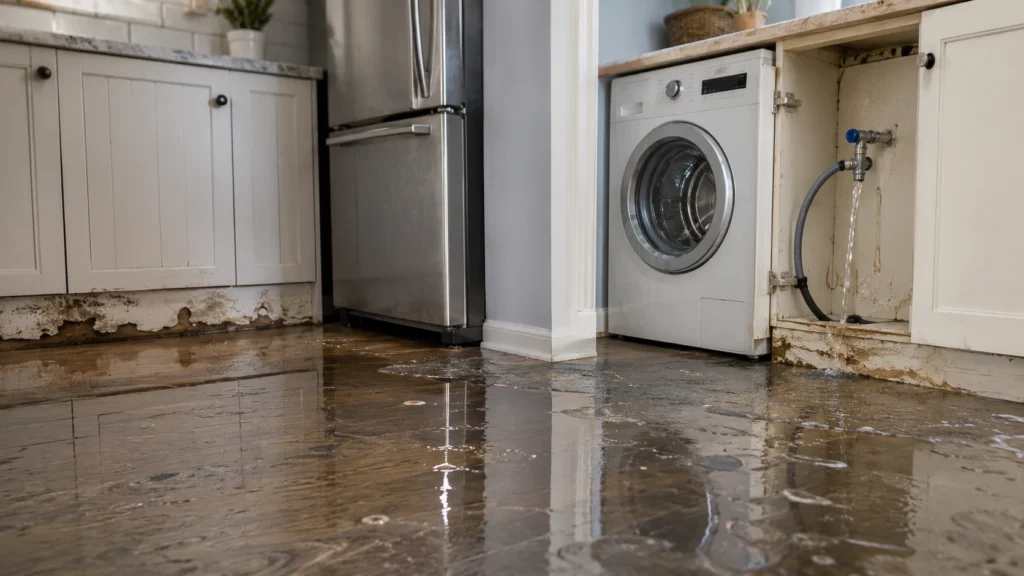
Appliance Leak Insurance Claims can look simple at first. A wet floor. A leaking washer. A dishwasher that dripped under the cabinets. A refrigerator line that quietly soaked the wall behind it. Then, suddenly, the repair bill grows. Flooring is swollen. Cabinets are soft. Drywall smells damp. The insurance estimate arrives, and it barely covers the visible damage. That is where many homeowners get frustrated. Appliance leaks often create more damage than people expect because water rarely stays in one neat spot. It travels under flooring, behind baseboards, into wall cavities, beneath cabinets, and sometimes into rooms that appear untouched.
For homeowners in Robinson, appliance leaks can quickly become more than a cleanup problem. They can become a documentation problem, a coverage problem, and a repair scope problem. The claim may depend on how the leak happened, how long it continued, what materials were affected, and how well the damage was documented from the start. That is also why understanding When Disaster Strikes: Insurance Adjuster situations matters. Once the insurance company gets involved, the claim is not only about water on the floor. It is about proof, policy language, timing, inspection details, and whether the insurer agrees that the damage was sudden and accidental.
An appliance leak can come from many places. A washing machine hose may burst during a cycle. A dishwasher may leak from a failed supply line. A refrigerator ice maker line may drip slowly behind the wall. A water heater may rupture and flood the nearby rooms. Even an air conditioning unit can cause water damage if a condensate line backs up or a drain pan fails. However, insurance coverage is not automatic. Most homeowners policies focus heavily on the cause of loss. In many cases, sudden and accidental water discharge may be covered. Meanwhile, long-term seepage, poor maintenance, wear and tear, or gradual deterioration may be denied.
That distinction is critical. A pipe that suddenly disconnects from a dishwasher is very different from a leak that has been staining the cabinet floor for six months. One may look like a covered event. The other may look like a maintenance issue. The damage may appear similar, but the claim outcome can be completely different. The appliance itself is another issue. Many homeowners assume the insurance company will pay to replace the failed appliance. Often, that is not the case. The policy may cover the resulting water damage but exclude the cost to repair or replace the appliance that caused the leak.
So, if your washing machine breaks and floods the laundry room, the flooring, drywall, trim, and nearby cabinets may be part of the claim. The washer itself may not be. That detail surprises people, but it is common in property claims. Timing also matters. Reporting the damage quickly, stopping the water source, saving evidence, and documenting every affected area can make the claim stronger. Waiting too long can give the insurance company room to argue that damage became worse because the homeowner did not act promptly.
Water can also move through small spaces in ways that are easy to underestimate. For example, capillary action explains how liquid can move through narrow or porous spaces, which helps illustrate why water from an appliance leak may travel under flooring, into drywall, or through hidden building materials before the surface looks severely damaged. That is why Appliance Leak Insurance Claims should be handled with care from the beginning. A small visible stain may be only the first clue. The real damage may be under the surface.
What Counts as an Appliance Leak Insurance Claim?
An appliance leak insurance claim is a property damage claim caused by water escaping from a household appliance or appliance-related connection. These claims usually involve sudden water discharge, overflow, or hidden leakage from equipment inside the home.
Common examples include:
- A washing machine hose bursts
- A dishwasher supply line leaks under the sink
- A refrigerator ice maker line drips behind the wall
- A water heater tank fails
- A dishwasher overflows during a cycle
- A washer drain hose disconnects
- An HVAC condensate line backs up
- A water filter connection leaks
- A garbage disposal connection fails
- A utility room appliance floods nearby rooms
Although these events may sound ordinary, the repair process can become expensive. Water damage often affects connected materials. If laminate flooring runs continuously from the kitchen into the dining room, a leak near the refrigerator may raise questions about whether one section can be repaired or whether a larger flooring area must be replaced for a reasonable match. Cabinets create another challenge. Water can soak into cabinet boxes, toe kicks, and end panels. The surface may look normal at first, but swelling, delamination, odor, or mold can develop later. Insurance estimates often miss this type of damage because it is not always obvious during a quick inspection.
The Most Common Appliances That Cause Water Damage
Washing Machines
Washing machines are one of the most common sources of appliance leaks. The leak may come from a cracked supply hose, loose connection, clogged drain, failed pump, or overflowing tub.
When a washer leaks, damage can spread fast. Laundry rooms are often located near hallways, bedrooms, garages, or kitchens. If the leak happens upstairs, water may also travel into ceilings, insulation, light fixtures, and walls below. The most important step is to shut off the water immediately. Then, take photos of the washer, hoses, wet flooring, affected walls, and any water trail. If a plumber identifies the cause, request a written report.
Dishwashers
Dishwasher leaks can be sneaky. A bad door seal may release water onto the kitchen floor. A loose supply line may leak beneath the cabinet. A failed drain hose may send dirty water into areas homeowners cannot see. The area under and around a dishwasher should be inspected carefully. Water can damage cabinets, flooring, subflooring, baseboards, and drywall behind the unit. In some cases, the dishwasher must be removed so the full damage can be documented.
Refrigerators and Ice Maker Lines
Refrigerator leaks are often caused by small plastic or copper water supply lines connected to ice makers or water dispensers. These leaks may drip slowly behind the appliance for days or weeks before anyone notices. By the time the leak is discovered, the floor behind the refrigerator may be warped, the wall may be wet, and cabinets nearby may have absorbed moisture. Because these leaks can be hidden, insurance companies often question whether the damage was sudden or long-term.
Water Heaters
Water heater leaks can be severe. A tank can rupture and release a large amount of water quickly. Valves and connections can also fail. Since water heaters are often located in garages, closets, attics, or utility rooms, the damage may spread before anyone sees it.
If the water heater is old or corroded, the insurance company may review the claim closely. They may try to separate covered water damage from excluded appliance deterioration.
HVAC Units and Condensate Lines
An air conditioning system may not be the first thing people think of when discussing appliance leaks, but HVAC-related water damage is common. A clogged condensate drain line, rusted drain pan, or failed float switch can cause water to back up and leak into ceilings, walls, or flooring. These claims can become complicated because the damage may occur slowly or in hidden spaces. Documentation from an HVAC technician can help explain the cause and timeline.
Is Appliance Leak Damage Covered by Homeowners Insurance?
In many cases, homeowners insurance may cover sudden and accidental water damage caused by an appliance leak. However, coverage depends on the policy, the cause of the leak, the damage timeline, and the exclusions. A covered claim may involve a sudden water discharge. For example, a washing machine hose bursts while the homeowner is away for two hours. Water floods the laundry room and damages nearby flooring. That type of event often fits the general idea of sudden and accidental damage.
A denied claim may involve a slow leak that continued over time. For example, a refrigerator line dripped behind the wall for months, and the homeowner only noticed after mold appeared. The insurance company may argue that the damage resulted from repeated seepage or lack of maintenance. This is why Appliance Leak Insurance Claims often turn on evidence. Photos, plumber reports, mitigation records, moisture readings, and repair estimates can help show what happened and how the damage spread. Coverage may also be limited by mold exclusions, water damage sublimits, wear-and-tear exclusions, or policy language regarding repeated leakage. Homeowners should read the policy carefully, especially the exclusions and water damage provisions.
Sudden Leak vs. Long-Term Leak
The phrase “sudden and accidental” appears often in insurance discussions because it can affect whether a claim is covered. A sudden leak happens quickly and unexpectedly. A long-term leak develops over time.
Examples of sudden appliance leaks include:
- A washer hose bursts during use
- A dishwasher connection suddenly disconnects
- A water heater tank ruptures
- A refrigerator line breaks unexpectedly
- A drain hose slips out during a cycle
Examples of long-term leaks include:
- A slow drip under a dishwasher over several months
- Repeated moisture behind a refrigerator
- A water heater leak caused by visible corrosion
- A cabinet base showing old staining and rot
- Mold growth indicating prolonged moisture
The problem is that the insurance company may classify a leak as long-term even when the homeowner discovered it suddenly. Discovery and cause are not the same thing. You may find the damage today, but the insurer may argue that it started weeks earlier. That does not mean the claim should be accepted or denied without a closer look. A plumber, mitigation company, contractor, or public adjuster may help clarify whether the damage pattern supports a sudden event or a gradual one.
What Damage Can Appliance Leaks Cause?
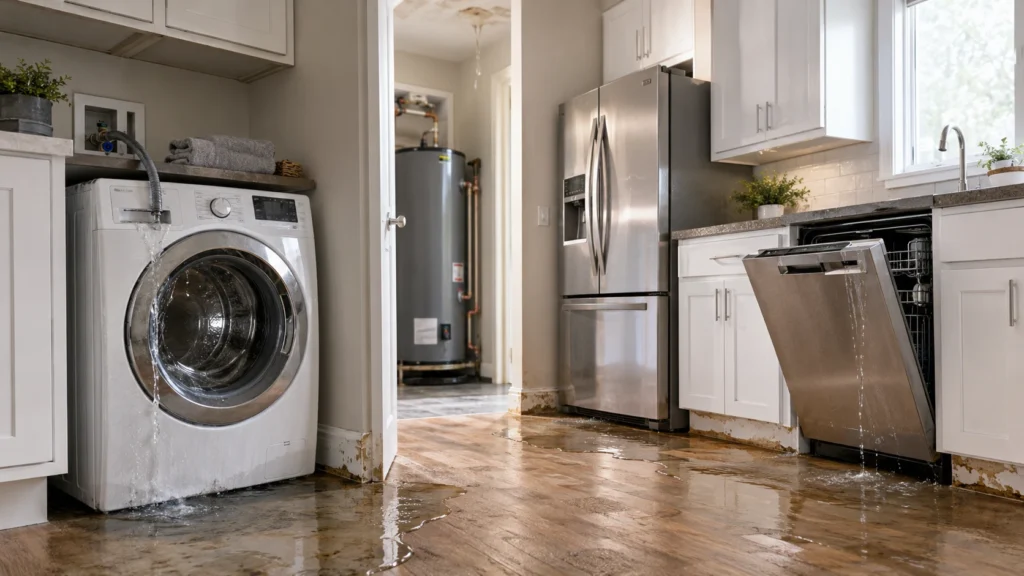
Appliance leaks can damage far more than the immediate area around the appliance. Water follows gravity, seams, gaps, and absorbent materials. It can move across a floor, under cabinets, behind baseboards, and into lower levels.
Common damage includes:
- Wet drywall
- Damaged insulation
- Swollen baseboards
- Warped hardwood flooring
- Buckled laminate
- Loose vinyl plank flooring
- Damaged tile underlayment
- Wet subflooring
- Cabinet swelling
- Cabinet delamination
- Countertop detach and reset needs
- Ceiling stains below the leak
- Electrical concerns
- Odors
- Mold growth
- Damaged personal property
Some damage appears immediately. Other damage develops later. Wood may swell after it absorbs water. Laminate may separate. Cabinets may soften. Paint may bubble. Odors may become stronger after the surface dries but hidden materials remain damp. That delayed damage is one reason initial insurance estimates may be incomplete. If the inspection happens too early, not all damage may be visible yet.
Why Insurance Estimates May Be Too Low
A low estimate is one of the most common problems in Appliance Leak Insurance Claims. The insurer may acknowledge coverage but pay only for a narrow repair. That can leave the homeowner without enough money to restore the property correctly. The initial estimate may include a small drywall patch and a few square feet of flooring. However, the contractor may later discover that cabinets need to be removed, flooring continues into another room, or the subfloor must be dried and repaired.
Commonly missed items include:
- Flooring beneath appliances
- Flooring beneath cabinets
- Continuous flooring into connected rooms
- Cabinet detach and reset
- Cabinet box replacement
- Toe-kick replacement
- Countertop removal and reset
- Drywall texture matching
- Paint blending across walls
- Baseboard and trim replacement
- Subfloor drying or repairs
- Moisture mapping
- Mold testing
- Mold remediation
- Plumbing access repairs
- Debris removal
- Final cleaning
- Permit or code-related work
The insurance estimate should be compared line by line with contractor estimates. If the insurance scope leaves out necessary work, the homeowner may need a supplement.
How Insurance Companies Investigate Appliance Leak Claims
After the claim is reported, the insurance company usually assigns an adjuster to inspect the damage. The adjuster may take photos, measure rooms, write an estimate, and ask questions about what happened.
The insurer may also ask for:
- The date the leak was discovered
- The appliance involved
- Photos of the damaged area
- A plumber’s invoice
- A cause-of-loss report
- Mitigation records
- Moisture readings
- Repair estimates
- Maintenance history
- Proof of emergency repairs
- Damaged parts or failed connections
The insurance company may look for signs of long-term leakage. Staining, rot, rust, mold, old water marks, or repeated repair history may affect the claim. However, these details should be evaluated carefully. Not every stain proves long-term damage. Not every hidden leak means the homeowner neglected the property. In Robinson, homeowners dealing with appliance leaks should keep written records of every call, email, inspection, and estimate. Clear records can help reduce confusion if the claim becomes disputed.
Steps to Take Immediately After an Appliance Leak
Fast action matters. It protects the home and supports the claim. First, stop the water source. Turn off the appliance valve if possible. If you cannot identify the appliance shutoff, turn off the main water supply. Next, document the scene before moving too much. Take photos and videos of the appliance, water on the floor, damaged walls, affected cabinets, and any nearby rooms. Capture wide shots and close-ups.
Then, begin reasonable mitigation. That may include removing standing water, calling a water mitigation company, setting up drying equipment, or hiring a plumber. Insurance policies often require homeowners to protect the property from further damage.
Here is a simple action table:
| Step | Why It Matters |
| Shut off the water | Prevents additional damage |
| Photograph everything | Preserves evidence before cleanup |
| Call a plumber | Helps identify the cause |
| Start mitigation | Reduces moisture and mold risk |
| Save receipts | Supports reimbursement |
| Review the estimate | Helps catch missing items |
| Keep written records | Protects the claim history |
Avoid permanent repairs too early unless they are necessary for safety or to prevent additional damage. If materials must be removed, photograph them first.
Documentation Needed for Appliance Leak Insurance Claims
Documentation can make or break the claim. A homeowner who says, “The dishwasher leaked,” may not have enough proof. A homeowner who has photos, a plumber report, moisture readings, and a detailed contractor estimate is in a stronger position.
Useful documentation includes:
- Photos of the leaking appliance
- Photos of the damaged rooms
- Videos of active water discharge
- Plumber invoice
- Written cause-of-loss report
- Mitigation company invoice
- Moisture readings
- Drying logs
- Contractor repair estimate
- Personal property inventory
- Receipts for emergency repairs
- Emails from the insurance company
- Insurance estimate
- Copy of the policy
- Notes from phone calls
The plumber’s report is especially important. It should explain what failed, where the water came from, and whether the failure appeared sudden. Vague invoices can create problems. A clear report can help prevent confusion.
Common Reasons Appliance Leak Claims Are Denied
Insurance companies deny appliance leak claims for several reasons. Some denials are valid. Others may be worth challenging.
Common denial reasons include:
- The insurer says the leak was long-term
- The damage is blamed on wear and tear
- The appliance failure is excluded
- Mold is excluded or limited
- The claim was reported late
- The homeowner did not mitigate damage
- The damage is considered pre-existing
- The cause of loss is unclear
- The insurer says maintenance was poor
- Documentation is incomplete
A denial letter should cite specific policy language. Homeowners should read that letter carefully. The reason matters. A denial based on long-term leakage requires different evidence than a denial based on mold exclusions or late reporting. Do not assume the first denial is the final word. If the facts, reports, or damage evidence do not match the insurer’s explanation, the claim may deserve another review.
What to Do If the Claim Is Denied
If the insurance company denies the claim, request the denial in writing. Then compare the denial letter with the policy and the evidence. Look at the exact language used. Did the insurer say the damage happened over time? Did they say the appliance itself is excluded? Did they deny all damage or only part of it? Did they rely on a field adjuster’s opinion, plumber’s report, engineer report, or photographs?
Next, gather stronger evidence. That may include a second plumbing opinion, contractor estimate, moisture documentation, or photos showing the damage was discovered promptly. If the denial relies on assumptions, those assumptions may need to be addressed directly. For example, if the insurer says the dishwasher leak was long-term because cabinets were swollen, a contractor may need to explain that certain cabinet materials can swell quickly after direct water exposure. If the insurer says flooring can be patched, a flooring contractor may need to explain matching or continuity problems.
Underpaid Appliance Leak Claims
Not every disputed claim is denied. Some are simply underpaid. An underpaid claim may happen when the insurer accepts coverage but writes a repair estimate that is too small. This can leave the homeowner stuck between the insurance check and the contractor’s real repair cost. Underpayment often happens when the estimate includes only visible damage. Yet appliance leaks frequently create hidden damage. Cabinets may need removal. Flooring may need replacement beyond the immediate leak area. Drywall may require texture matching. Paint may need blending across continuous walls.
A strong supplement should not be a guess. It should include a detailed scope, photos, measurements, contractor pricing, and an explanation for each added item. For Appliance Leak Insurance Claims, the supplement process is often where the real claim value gets clarified.
Flooring Disputes After Appliance Leaks
Flooring is one of the biggest sources of disagreement. Insurance companies may pay to replace only the damaged section. Contractors may say the repair requires a larger area. The issue often comes down to matching and continuity. If a refrigerator leak damages part of a continuous kitchen floor, replacing a small section may leave a visible mismatch. If the flooring product is discontinued, repair becomes harder. Hardwood can cup, crown, or buckle. Laminate can swell at the seams. Vinyl plank can trap water underneath. Tile may appear fine on top while underlayment or subfloor materials are affected below.
Homeowners should document:
- The full flooring layout
- Continuous areas connected to the damaged section
- Product availability
- Visible swelling or separation
- Subfloor moisture
- Contractor matching concerns
Flooring claims should be reviewed carefully because small omissions can create large out-of-pocket costs.
Cabinet Damage After Appliance Leaks
Cabinets are another frequent problem. Water from dishwashers, refrigerators, and sinks can soak cabinet bases before anyone notices.
Cabinet damage may include:
- Swollen side panels
- Soft cabinet bottoms
- Delamination
- Damaged toe kicks
- Staining
- Odor
- Mold
- Warped doors
- Damaged finish
- Countertop support concerns
Insurance estimates may include cabinet repair when replacement is needed. Or they may include replacing one cabinet box without considering whether the finish, profile, and layout will match the remaining cabinets. Cabinet claims require strong photos and contractor input. If cabinets must be detached to access flooring or dry hidden materials, those labor costs should be considered as part of the repair scope.
Mold and Appliance Leak Claims
Mold can complicate appliance leak claims quickly. It can also raise health, safety, and cost concerns. Mold may appear when moisture remains trapped behind walls, under cabinets, or beneath flooring. Sometimes mold is visible. Other times, odor is the first sign. If mold is suspected, professional testing or remediation may be needed.
However, insurance coverage for mold varies. Some policies include limited mold coverage. Others exclude or restrict it. The insurer may cover mold only if it resulted from a covered water loss and the homeowner acted promptly. That is why quick mitigation is so important. Waiting can make the damage worse and give the insurer a reason to dispute part of the claim.
Replacement Cost vs. Actual Cash Value
Payment type matters in Appliance Leak Insurance Claims. Many homeowners are confused when the first check is lower than the full repair estimate. Often, that is because depreciation has been applied. Replacement cost value means the cost to replace damaged property with similar materials. Actual cash value means replacement cost minus depreciation. Some policies pay actual cash value first, then release recoverable depreciation after repairs are completed and documented.
For example, if damaged flooring costs $12,000 to replace, the insurer may initially pay less after depreciation and deductible. The remaining recoverable depreciation may be paid later once the homeowner proves the repairs were completed.
Homeowners should review the estimate carefully to understand:
- Replacement cost value
- Actual cash value
- Deductible
- Depreciation
- Recoverable depreciation
- Non-recoverable depreciation
- Coverage limits
- Excluded items
The first payment is not always the full payment.
How Long Does an Appliance Leak Claim Take?
The timeline depends on the severity of damage, the responsiveness of the insurance company, the need for mitigation, and whether the claim is disputed. A simple claim may move quickly. A larger claim involving cabinets, flooring, mold, or multiple rooms may take longer.
| Claim Stage | Typical Timeline |
| Leak discovery | Same day |
| Emergency mitigation | 1–3 days |
| Plumbing inspection | Same day to several days |
| Insurance inspection | Several days to weeks |
| Initial estimate | 1–3 weeks after inspection |
| Supplement review | Several weeks or more |
| Repairs | Depends on project size |
The best way to avoid unnecessary delay is to document early, respond quickly, and keep the claim organized.
Mistakes Homeowners Should Avoid
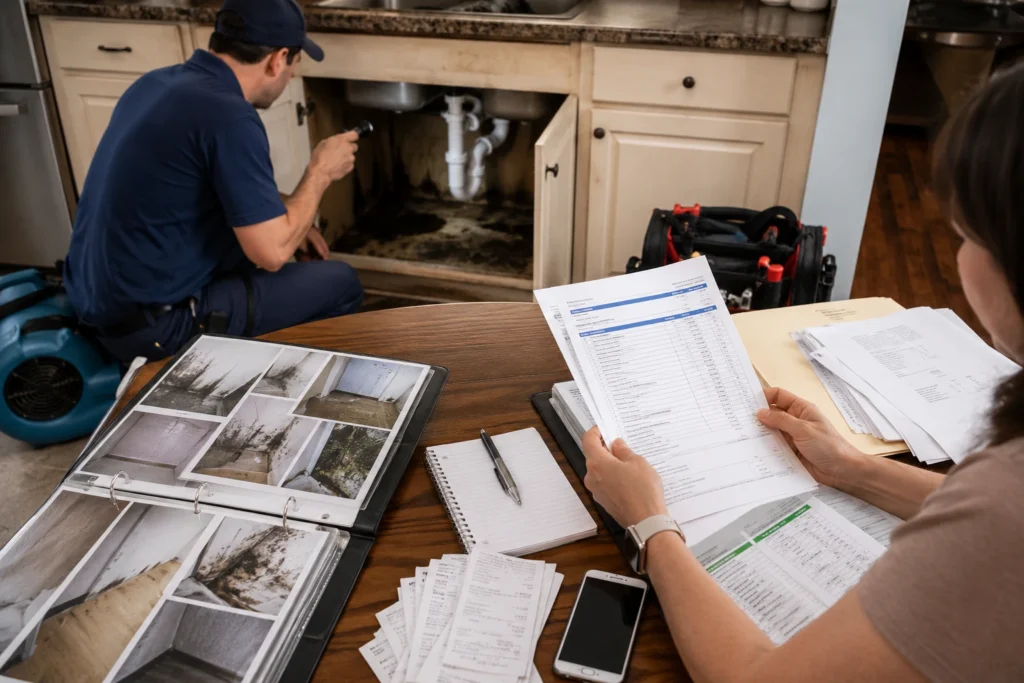
A few mistakes can weaken an otherwise valid claim.
Avoid these:
- Waiting too long to report the leak
- Throwing away damaged parts before photos
- Failing to get a plumber’s report
- Cleaning up before documenting damage
- Ignoring hidden moisture
- Accepting the first estimate without review
- Starting permanent repairs without proof
- Forgetting to save receipts
- Relying only on phone conversations
- Missing policy deadlines
- Assuming visible damage is the full damage
The biggest mistake is treating a water claim casually. Appliance leaks may look small, but once water reaches flooring, cabinets, subflooring, or wall cavities, the repair scope can change dramatically.
How to Strengthen an Appliance Leak Insurance Claim
A strong claim is built with evidence. Not drama. Not guesswork. Evidence. Start with the cause. Get a plumber or qualified technician to explain what failed. Then document the damage in detail. Take photos from multiple angles. Include wide shots that show room layout and close-ups that show material damage.
Next, get a detailed contractor estimate. A one-line quote is not enough. The estimate should explain what must be removed, repaired, replaced, dried, cleaned, painted, reset, or tested. Then compare the contractor estimate with the insurance estimate. Look for missing rooms, missing materials, low quantities, wrong labor assumptions, and incomplete line items. Also, keep a claim folder. Save emails, invoices, photos, videos, reports, estimates, receipts, and notes. If you speak by phone, write down the date, person, and key points afterward.
When to Get Professional Claim Help
Some appliance leak claims can be handled directly by the homeowner. Others become too complex, especially when the damage is denied, delayed, or underpaid.
Professional help may be useful when:
- The claim is denied
- The estimate is too low
- Damage affects multiple rooms
- Cabinets are disputed
- Flooring matching is disputed
- Mold is involved
- The insurer says the leak was long-term
- The contractor estimate is much higher than the insurance estimate
- A supplement is needed
- The insurance company is not responding clearly
A public adjuster can review the damage, prepare a scope, document missing items, and communicate with the insurance company on the homeowner’s behalf. This can be especially helpful when the claim involves hidden moisture, repair disputes, or confusing policy language.
Final Thoughts on Appliance Leak Insurance Claims
Appliance Leak Insurance Claims are rarely just about the appliance. They are about the water path, the damaged materials, the policy language, and the proof behind the repair cost. A leak from a dishwasher, washer, refrigerator, water heater, or HVAC system can affect flooring, cabinets, drywall, trim, insulation, subflooring, and personal property. The damage may spread quickly. It may also hide quietly. Either way, the claim should be handled with care.
Homeowners in Robinson should act quickly, document thoroughly, and review insurance estimates closely before assuming the payment is complete. A small estimate may not reflect the real repair cost. A denial may not tell the full story. A supplement may be needed to address missing damage. The best approach is simple: stop the water, protect the property, document everything, get the cause in writing, compare estimates carefully, and ask questions when something does not make sense. Because once water gets into the wrong places, the claim is not small anymore. It is serious. And it deserves a serious review.
FAQs
Appliance leak insurance claims involve water damage caused by leaking household appliances, such as dishwashers, washing machines, refrigerators, water heaters, or HVAC systems.
Homeowners insurance may cover sudden and accidental water damage from appliance leaks, but it usually does not cover long-term leaks, wear and tear, or the failed appliance itself.
Washing machines, dishwashers, refrigerators with ice makers, water heaters, and HVAC condensate systems are among the most common sources of appliance leak claims.
Shut off the water source, document the damage with photos and videos, then contact a plumber or mitigation company to prevent further damage.
Yes, insurers may deny claims if they believe the leak was long-term, caused by poor maintenance, reported late, or excluded under the policy.
Insurance estimates may miss hidden damage under flooring, behind cabinets, inside walls, or beneath appliances, which can lead to an underpaid claim.
Mold coverage depends on the policy and whether the mold resulted from a covered water loss. Many policies limit or exclude mold coverage.
Emergency mitigation is important, but permanent repairs should usually wait until the damage is fully documented and inspected.
Yes, a public adjuster can document damage, review the insurance estimate, identify missing items, and help with denied or underpaid claims.
Photos, videos, plumber reports, mitigation invoices, moisture readings, contractor estimates, receipts, and insurance correspondence can help support the claim.