
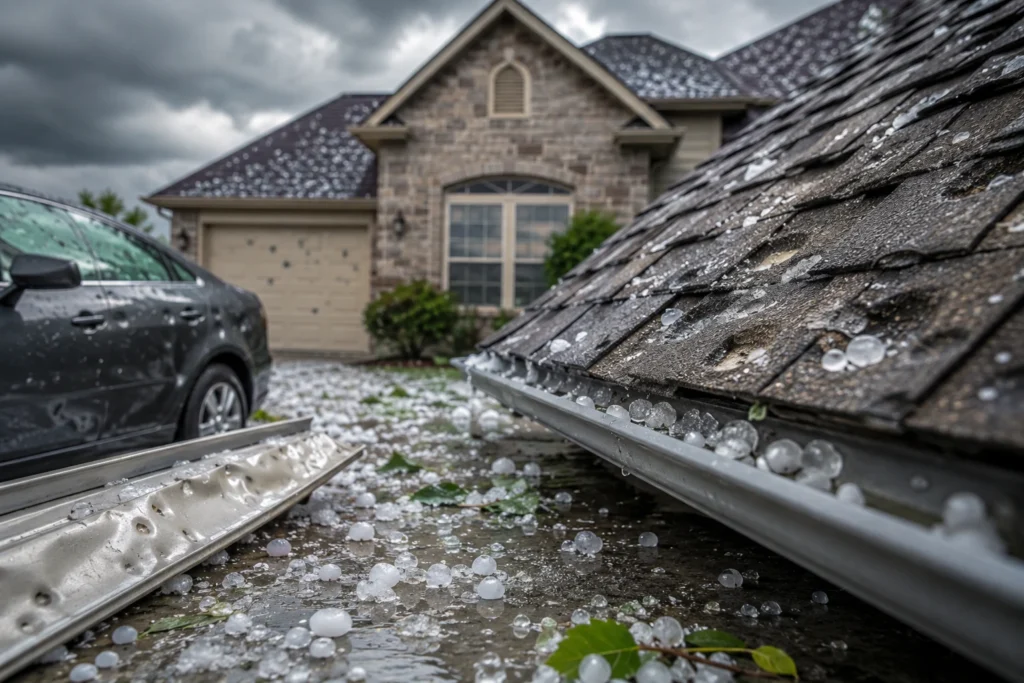
A hailstorm can move through a neighborhood in minutes, yet the damage it leaves behind may take weeks or even months to fully uncover. Knowing the immediate steps after a hailstorm is one of the most important parts of protecting your property, limiting repair costs, and preserving your insurance claim. Whether hailstones are the size of marbles or baseballs, taking organized action instead of reacting emotionally can make a significant difference in the outcome. When the storm finally passes, it’s tempting to rush outside and assess the damage immediately. That’s understandable. After all, your home or business represents a major investment. But moving too quickly without a plan can create unnecessary safety risks and even complicate your insurance claim. The first several hours should focus on protecting people, documenting conditions, and preventing additional damage before permanent repairs begin.
Weather-related property losses are complex events influenced by many environmental factors, including the principles of chaos theory, which explains how small atmospheric changes can produce dramatically different storm outcomes. Even neighboring homes may experience very different hail impacts depending on roof orientation, surrounding trees, wind direction, and the storm’s intensity. For homeowners and business owners in Robinson, severe hailstorms are more than an inconvenience they can lead to roof damage, broken windows, water intrusion, damaged HVAC equipment, and costly insurance claims. The good news is that taking the right steps immediately after the storm can reduce additional losses while strengthening the documentation you’ll need throughout the claims process. This guide walks through exactly what to do after a hailstorm. From staying safe and inspecting your property to documenting damage and communicating with your insurance company, each step plays a role in protecting both your property and your financial recovery.
Make Sure Everyone Is Safe First
Property can be repaired. People cannot. Before worrying about shingles, gutters, or broken windows, make certain everyone inside the home or building is safe. Even after hail stops falling, hazards may still exist around the property.
Walk carefully and remain alert for dangers such as:
- Downed electrical lines
- Broken glass
- Fallen trees or branches
- Damaged utility poles
- Gas odors
- Flooded electrical equipment
- Loose roofing materials
- Structural instability
If you notice a damaged power line, stay well away from it and notify your local utility provider immediately. Never assume a line is safe simply because it appears inactive. Likewise, if you smell natural gas, leave the building immediately and contact emergency services or your gas provider before re-entering the property.
Avoid Climbing Onto the Roof
One of the biggest mistakes homeowners make is trying to inspect the roof themselves. Fresh hail damage often weakens roofing materials. Surfaces may also be wet, slippery, or covered with loose granules. Even experienced homeowners can lose their footing. Instead, perform your initial inspection from ground level using binoculars or by viewing the roof from several safe locations around the property. If you suspect major structural damage, avoid entering affected portions of the building until they can be evaluated by qualified professionals.
Perform a Safe Exterior Inspection
Once conditions are safe, begin documenting the exterior. The goal isn’t to diagnose every issue immediately. Instead, you’re looking for visible evidence that helps establish the extent of the storm’s impact.
Walk slowly around the property and inspect:
- Roof surfaces visible from the ground
- Gutters
- Downspouts
- Siding
- Garage doors
- Windows
- Skylights
- Outdoor lighting
- Decks
- Patios
- Fencing
- HVAC condenser units
- Detached garages
- Storage sheds
- Vehicles
Many hail impacts leave subtle marks that are easy to overlook at first glance. Dented metal surfaces often provide the earliest clues that roofing materials may also have sustained damage.
| Area | What to Look For | Possible Damage |
| Roof | Missing shingles, bruising, granule loss | Water intrusion |
| Gutters | Dents, separation | Drainage problems |
| Siding | Cracks, punctures | Moisture penetration |
| Windows | Broken seals, cracked glass | Interior leaks |
| Skylights | Chips, fractures | Water damage |
| HVAC Unit | Bent fins, dents | Reduced efficiency |
| Garage Door | Surface dents | Cosmetic or structural damage |
| Fence | Broken boards, bent metal | Wind and hail impacts |
Take your time.
Small details often become important later during the insurance adjustment process.
Inspect the Interior for Hidden Damage
Not every hailstorm leaves obvious signs outside. Sometimes the first indication of roof damage appears inside the home several hours or even several days later. Walk through every room with good lighting and carefully inspect ceilings, walls, floors, and windows.
Pay close attention to:
- Ceiling stains
- Damp drywall
- Bubbling paint
- Water dripping around light fixtures
- Wet carpeting
- Hardwood floor cupping
- Window leaks
- Mold odors
- Damp attic insulation
- Wet storage areas
If your attic is accessible and safe to enter, use a flashlight to inspect the underside of the roof decking.
Look for:
- Wet insulation
- Water stains
- Active drips
- Daylight visible through roofing materials
- Darkened wood
Even a small leak can spread surprisingly quickly once moisture enters insulation or drywall. Document everything you discover before cleaning or moving damaged items.
Document Everything Before Making Repairs
This step cannot be overstated. Photos and videos often become some of the strongest pieces of evidence supporting an insurance claim. The more complete your documentation is immediately after the storm, the easier it becomes to demonstrate what actually happened. Begin with wide photographs showing the entire property. Then move closer. Capture individual damage from multiple angles.
Good documentation includes:
- Overall roof views (from the ground)
- Damaged gutters
- Broken windows
- Dented siding
- Interior water stains
- Wet insulation
- Damaged furniture
- Flooring
- Electronics
- Outdoor equipment
- Detached structures
- Landscaping
- Vehicles
Don’t forget video. Walking slowly around the property while narrating what you’re seeing provides additional context that still photographs sometimes miss.
Whenever possible:
- Leave timestamps enabled.
- Photograph serial numbers on damaged equipment.
- Capture weather conditions if they’re still visible.
- Take multiple photos of every damaged area.
Continue documenting as conditions change over the following days. Leaks often expand after additional rainfall.
Prevent Additional Property Damage
Insurance policies generally require property owners to take reasonable steps to reduce further damage after a covered loss. This responsibility is often called mitigation. The key word is reasonable. You aren’t expected to perform permanent repairs yourself. Instead, focus on temporary measures that protect the property until professional repairs can begin.
Examples include:
- Cover exposed roof areas with tarps
- Board broken windows
- Remove standing water
- Place buckets beneath leaks
- Dry wet flooring
- Move furniture away from water
- Protect electronics
- Cover valuable belongings with plastic sheeting
- Increase ventilation to reduce moisture
If emergency services are required, keep every receipt.
Save invoices for:
- Emergency tarping
- Water extraction
- Temporary lodging
- Equipment rental
- Boarding materials
- Drying fans
- Dehumidifiers
These expenses may become important when your insurance company evaluates the claim.
Contact Your Insurance Company Promptly
Once your property is safe and the initial documentation is complete, notify your insurance company. Don’t wait several weeks hoping minor damage will simply disappear. Some problems become worse over time, and delayed reporting can create unnecessary questions during the claims process.
When reporting the claim, be prepared to provide:
- Policy number
- Date of loss
- Property address
- Brief description of damage
- Emergency repairs already completed
- Contact information
Your insurance company will typically assign a claim number and schedule an inspection with an adjuster.
Write down:
- Claim number
- Representative’s name
- Date and time of every phone call
- Email confirmations
- Inspection appointments
Keeping organized records from the beginning makes future communication much easier.
Avoid Common Mistakes That Hurt Insurance Claims
The hours after a hailstorm can feel chaotic. You’re juggling phone calls, checking on family members, cleaning up debris, and wondering how extensive the damage really is. It’s during this stressful period that many homeowners unknowingly make decisions that can complicate their insurance claims. Fortunately, these mistakes are avoidable. One of the biggest errors is throwing away damaged materials too soon. Broken gutters, dented vents, shattered skylights, or damaged pieces of siding may seem like junk, but they can serve as valuable evidence during the inspection process. Unless they present an immediate safety hazard, keep damaged items until your insurance company advises otherwise.
Another common mistake is beginning permanent repairs before the insurance adjuster has had an opportunity to inspect the property. Temporary measures to prevent additional damage are encouraged, but replacing roofing materials, removing damaged drywall, or installing new windows too soon may make it difficult to verify the original extent of the loss. Homeowners should also resist the urge to accept the first repair estimate they receive. Roofing contractors, restoration companies, and adjusters may all arrive at different conclusions based on what they observe. Taking time to understand the scope of the damage helps you make informed decisions rather than rushed ones. Finally, don’t underestimate what appears to be “minor” hail damage. A few dents in metal flashing or small granule loss on shingles may not seem significant today, but those seemingly minor impacts can shorten the life of the roofing system and create opportunities for moisture intrusion over time.
| Common Mistake | Potential Consequence |
| Starting permanent repairs immediately | Damage cannot be fully documented |
| Throwing away damaged materials | Loss of important evidence |
| Waiting too long to file a claim | Delays and potential claim complications |
| Ignoring small leaks | More extensive interior damage |
| Hiring the first contractor without research | Poor workmanship or inflated costs |
| Failing to document everything | Weaker support for the insurance claim |
Avoiding these pitfalls puts you in a much stronger position throughout the recovery process.
Have a Professional Inspection Performed
Not every hail impact is visible from the ground. In fact, some of the most expensive storm damage remains hidden until an experienced roofing professional performs a thorough inspection. That’s one reason why relying solely on a quick visual walk-around can be misleading. Professional inspectors know where hail tends to leave its mark.
They evaluate areas such as:
- Asphalt shingles
- Metal roofing panels
- Flashing
- Ridge caps
- Roof vents
- Pipe boots
- Gutters
- Downspouts
- Chimney caps
- Skylights
- Roof valleys
- Fascia and soffits
Many inspectors also examine what are known as “soft metal” components. These materials often show dents more clearly than roofing shingles and can provide additional evidence that the storm produced damaging hail. Inside the attic, inspectors may look for signs of hidden moisture, damaged roof decking, wet insulation, or daylight penetrating through the roof structure. These findings can reveal issues that have not yet become visible inside the living space. Professional inspections are about more than identifying damage they also help establish the full scope of the repairs that may be necessary. An accurate assessment reduces the likelihood of important items being overlooked when repair estimates are prepared.
Understand the Types of Hail Damage Insurance May Cover
Every insurance policy is different, and coverage depends on the specific language within the policy. However, many property insurance policies may provide protection for damage caused by covered hail events. Understanding the types of damage that commonly occur helps property owners recognize why a thorough inspection is so important.
Roofing Systems
The roof usually absorbs the greatest impact during a hailstorm.
Potential damage includes:
- Bruised shingles
- Granule loss
- Cracked shingles
- Broken tiles
- Damaged ridge caps
- Exposed underlayment
Although some damage is immediately obvious, other issues develop gradually as water begins working beneath compromised roofing materials.
Siding
Vinyl, fiber cement, wood, and metal siding can all suffer hail impacts.
Inspect for:
- Cracks
- Chips
- Dents
- Holes
- Loose panels
- Paint damage
Even cosmetic damage may warrant further evaluation if protective coatings have been compromised.
Windows
Hail doesn’t always shatter glass.
Sometimes it damages:
- Window frames
- Weather seals
- Exterior trim
- Screens
These problems may eventually allow moisture or air infiltration.
Gutters and Downspouts
Metal gutters frequently display visible dents after a severe storm.
Additional issues may include:
- Loose fasteners
- Separated joints
- Drainage problems
- Improper water flow
Since gutters help direct water away from the structure, even modest damage deserves attention.
HVAC Equipment
Outdoor air conditioning units are particularly vulnerable because they remain exposed throughout the storm.
Inspect for:
- Bent condenser fins
- Damaged fan guards
- Electrical concerns
- Reduced cooling efficiency
Have an HVAC technician inspect the unit if you suspect damage before operating it extensively.
Interior Water Damage
Water often creates more expensive problems than the hail itself.
Moisture entering through a damaged roof can affect:
- Drywall
- Paint
- Flooring
- Cabinets
- Insulation
- Electrical systems
- Personal belongings
Addressing leaks promptly helps minimize secondary damage.
Detached Structures
Don’t overlook detached garages, workshops, sheds, pergolas, gazebos, fences, or pool houses. These structures are exposed to the same storm and should be inspected with the same level of care as the primary building.
Watch for Storm-Chasing Contractors
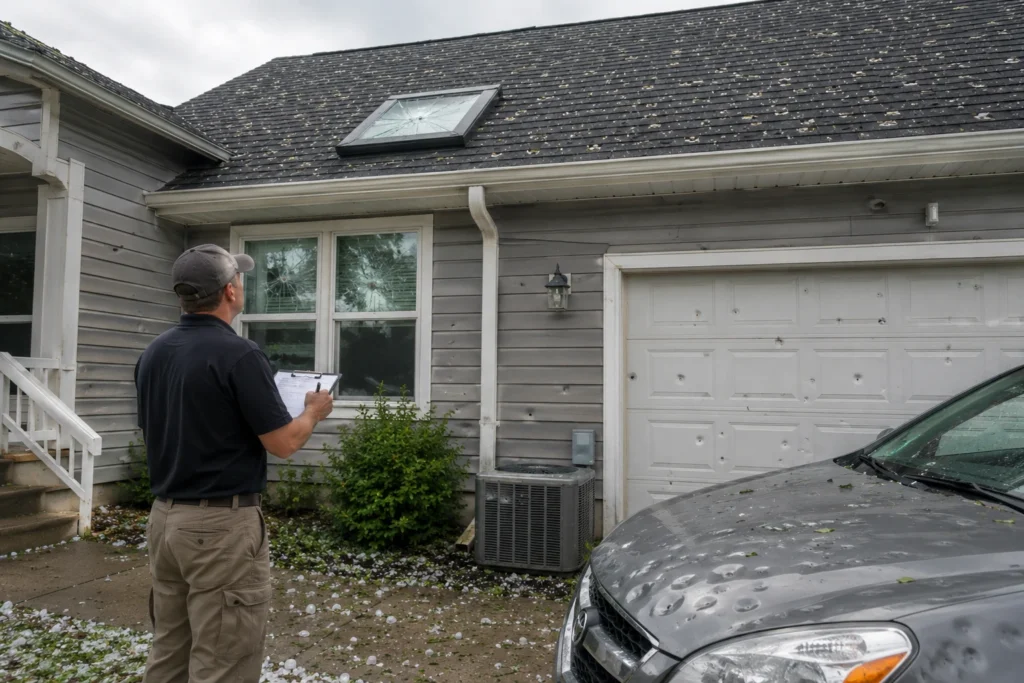
Unfortunately, severe storms often attract contractors from outside the area who travel from community to community following major weather events. While many contractors are reputable professionals, others rely on aggressive sales tactics that place unnecessary pressure on homeowners.
Be cautious if someone:
- Knocks on your door immediately after the storm
- Insists repairs must begin today
- Demands a large upfront payment
- Offers to waive your deductible
- Refuses to provide licensing or insurance information
- Pressures you to sign a contract immediately
A trustworthy contractor welcomes questions.
Before hiring anyone:
- Verify licensing requirements in your area.
- Request proof of insurance.
- Ask for local references.
- Read online reviews.
- Obtain written estimates.
- Carefully review every contract before signing.
Taking an extra day to research a contractor is far less expensive than correcting poor workmanship later.
When Should You Contact a Public Adjuster?
Insurance claims don’t all follow the same path. Some move smoothly from inspection to settlement, while others become more complicated as questions arise about the scope of damage, repair costs, or policy coverage. This is where Home and Business Public Adjusters may become an important resource for certain property owners. A public adjuster works on behalf of the policyholder rather than the insurance company. Their role typically involves reviewing the policy, inspecting the property, organizing documentation, preparing estimates, and helping present the claim as completely as possible.
Situations where professional claim assistance may be worth considering include:
- Significant hail damage affecting multiple areas
- Commercial property losses
- Large residential claims
- Disagreements over repair estimates
- Claim denials
- Partial claim payments
- Complex structural damage
- Extensive interior water damage
Every claim is unique. The goal is not simply to pursue a larger settlement, but to ensure the documented damage accurately reflects the repairs needed to restore the property. If you’re unfamiliar with how this process works, Robinson Public Adjuster provides additional educational information in their article, “Behind the Claim: A Clear, Real-World Look at How Public Adjusters Work,” which explains the role public adjusters can play during complex property insurance claims.
Why Acting Quickly Can Make a Significant Difference
Every hour counts after a hailstorm. Although some damage is immediately visible, other problems develop slowly as moisture works its way into the building. A small roof puncture today can become stained ceilings, warped flooring, mold growth, and expensive structural repairs weeks later. Acting quickly doesn’t guarantee a smoother insurance claim, but it does help preserve evidence and reduce the likelihood of additional losses. Furthermore, prompt action creates a clearer timeline of events. When photographs, videos, inspection reports, and repair receipts are collected shortly after the storm, it becomes much easier to demonstrate what happened and how the damage progressed. Organized documentation often proves more valuable than relying on memory weeks or months later.
Property owners should also maintain a dedicated claim file. Whether you prefer a physical folder or a digital file, keep everything in one place, including photographs, inspection reports, contractor estimates, receipts, emails, and notes from conversations with your insurance company. This simple habit can save hours of frustration throughout the claims process. Likewise, record every phone conversation related to the claim. Write down the date, time, the name of the representative, and a brief summary of what was discussed. These notes provide a useful reference if questions arise later. Another helpful step is to continue monitoring the property after the initial inspection. Some forms of hail damage do not reveal themselves immediately. Heavy rain over the following days may expose roof leaks, damaged flashing, or compromised seals around skylights and windows. Catching these issues early can help prevent secondary damage that may be more expensive to repair.
For commercial property owners, the need for quick action is even greater. Water intrusion, damaged roofing systems, and compromised building components can interrupt daily operations and affect employees, customers, and tenants. Creating a temporary protection plan while permanent repairs are arranged helps reduce downtime and keeps the property as safe as possible. If your home has outdoor features such as decorative pathways or Front Yard Landscape Lighting Ideas, inspect those areas as well. Hail can crack light fixtures, damage wiring, or loosen mounting hardware, particularly if the lighting system is exposed in landscaped areas. Including these items in your documentation ensures every affected component receives proper attention.
Create a Storm Recovery Checklist
When multiple repairs need attention, it’s easy to overlook important tasks. A simple checklist keeps the recovery process organized and ensures nothing is forgotten.
| Task | Status |
| Confirm everyone is safe | □ |
| Inspect exterior from the ground | □ |
| Inspect interior for leaks | □ |
| Take photographs and videos | □ |
| Prevent additional damage | □ |
| Contact insurance company | □ |
| Schedule professional inspection | □ |
| Save receipts and invoices | □ |
| Organize claim documents | □ |
| Monitor for new damage | □ |
Checking off each step provides peace of mind and creates a logical sequence that supports both property recovery and the insurance process.
Preparing for Future Hailstorms

Although no one can prevent severe weather, homeowners can reduce future risks by preparing before the next storm arrives. Start with routine maintenance. A well-maintained roof, properly secured gutters, and trimmed tree branches are generally better equipped to withstand severe weather than neglected systems. Additionally, schedule regular roof inspections, especially if your roof is approaching the end of its expected service life. Small maintenance issues corrected today may prevent much larger problems after the next hailstorm.
It’s also wise to create a home inventory. Photograph valuable belongings, save purchase receipts when possible, and record serial numbers for major appliances and electronics. Keeping these records in cloud storage or another secure location makes them easier to access if physical documents are damaged. Review your insurance policy annually as well. Understanding deductibles, coverage limits, exclusions, and optional endorsements before disaster strikes allows you to make informed decisions rather than trying to interpret the policy during a stressful claim. Finally, establish relationships with reputable local contractors before they’re urgently needed. After widespread storms, qualified roofing and restoration companies often experience heavy demand. Knowing whom to call ahead of time can reduce delays and eliminate the pressure of making rushed decisions.
Conclusion
Recovering from a hailstorm involves much more than replacing damaged shingles or repairing broken windows. The actions taken during the first several hours and days often influence how efficiently repairs move forward and how well an insurance claim is documented. The immediate steps after a hailstorm should always begin with protecting people from potential hazards. Once everyone is safe, inspect the property carefully from the ground, document every visible sign of damage, prevent additional loss with temporary protective measures, and notify your insurance company promptly. Professional inspections can then help identify hidden damage that may not be obvious during an initial walk-around.
Equally important is staying organized. Keep photographs, receipts, inspection reports, estimates, and communication records together throughout the claims process. Careful documentation helps create a clearer picture of the loss and supports informed discussions as repairs move forward. For homeowners and business owners in Robinson, responding quickly after severe weather can help reduce secondary damage while preserving valuable evidence that may be important during the insurance claim. Every property is different, and every storm leaves its own unique impact. Nevertheless, a thoughtful and organized response provides the strongest foundation for recovery. When questions arise about complex hail damage, disputed repair estimates, or challenging insurance claims, seeking experienced guidance may help property owners better understand their options. With preparation, careful documentation, and timely action, you can move from storm recovery to restoration with greater confidence and peace of mind.
FAQs
Start by ensuring everyone is safe, inspecting your property from the ground, documenting damage, preventing further loss, and notifying your insurance company promptly.
No. Roofs can be slippery or structurally weakened after a storm, so it’s safer to have a professional perform the inspection.
Report the damage as soon as possible after documenting it, as delays can complicate the claims process and repairs.
Take photos of the roof, gutters, siding, windows, vehicles, outdoor equipment, and any interior water damage before making repairs.
Yes. Hail can create hidden damage that allows water to enter the home days or even weeks after the storm.
Only make temporary repairs to prevent additional damage. Permanent repairs should generally wait until the property has been inspected.
Many homeowners insurance policies cover hail damage, but coverage depends on the terms, exclusions, and limits of your specific policy.
Receipts for emergency repairs, tarping, water removal, and temporary lodging may support reimbursement if those expenses are covered by your policy.
Consider contacting a public adjuster if your claim is denied, underpaid, involves extensive damage, or becomes difficult to resolve.
Continue checking for new leaks, water stains, or other signs of damage for several weeks, especially after additional rainfall.