
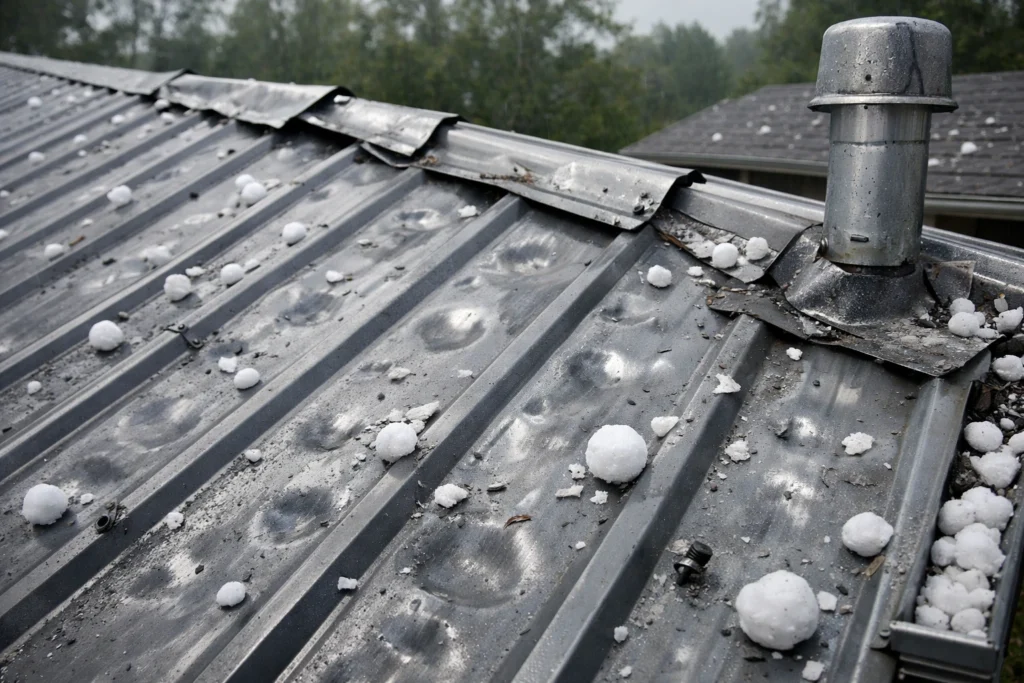
Hailstorms can arrive quickly, leaving homeowners with questions, uncertainty, and expensive repairs to consider. One of the most common concerns after a severe storm is: will insurance pay hail damage metal roof claims when the roof appears durable but has visible or hidden storm impacts? The answer depends on several important factors, including the type of damage, the details of the insurance policy, the timing of the claim, and the quality of the documentation provided. For homeowners in Robinson, understanding how insurance companies evaluate metal roof hail damage can help them make informed decisions after a storm.
Metal roofs have earned a reputation for strength, durability, and long service life. They can withstand harsh weather conditions, resist fire, and often last significantly longer than many traditional roofing materials. However, even a high-quality metal roofing system is not completely protected from severe hail. Large hailstones traveling at high speeds can create dents, damage protective coatings, loosen components, and reduce the roof’s ability to perform as intended. The difficulty with metal roof hail damage is that the problem is not always obvious. Unlike broken shingles or missing roofing materials, metal damage may appear subtle. A roof can look acceptable from the ground while still having dozens of impact points across panels, seams, vents, and flashing areas.
This is why a professional inspection is so important after a hail event. A trained roofing professional or qualified claim specialist can identify patterns that an average homeowner may overlook. They can determine whether damage is recent, whether it appears consistent with a specific storm, and whether repairs or replacement may be necessary. Insurance companies generally evaluate hail claims based on the cause of damage, the condition of the roof before the storm, and the coverage provided under the homeowner’s policy. A storm-related loss is typically handled differently than damage caused by aging, poor maintenance, or long-term deterioration. A strong insurance claim is built on evidence. Photos, inspection reports, weather information, repair estimates, and professional opinions all help create a complete record of what happened. Without proper documentation, homeowners may face delays, reduced settlements, or claim disagreements even when legitimate damage exists. Many homeowners assume that metal roofs are nearly impossible to damage because of their strength. While metal roofing is extremely durable, durability does not mean complete protection. A severe hailstorm can still create problems that require professional attention.
The question of will insurance pay hail damage metal roof claims usually depends on whether the damage is considered a covered event under the policy. Most standard homeowners insurance policies include protection against certain types of storm damage, but every policy has different conditions, exclusions, and requirements. For example, a policy may cover hail damage that happens suddenly during a documented storm. However, it may not cover rust caused by years of neglect, damage that existed before the policy started, or issues caused by improper maintenance. Understanding these differences helps homeowners approach the claims process with realistic expectations. Insurance coverage is not simply based on whether a roof has dents. Instead, insurers consider why the damage occurred, how severe it is, and whether the policy applies. When homeowners begin navigating complicated insurance situations, understanding professional claim assistance becomes valuable. Similar to the reasons explained in Why You Need a Fire Insurance Adjuster on Your Side, having experienced support can help property owners organize evidence, understand policy language, and communicate more effectively during difficult claim discussions.
How Hail Damages a Metal Roof
Metal roofing systems are designed to handle extreme conditions, but hail creates a unique type of impact damage. The force created when hailstones strike a roof depends on several factors, including storm intensity, hail size, wind speed, and the angle at which the hail hits the surface. Even smaller hail may create repeated impacts across a large roof area. Larger hailstones can create deeper dents, damage coatings, and affect important roofing components.
Understanding technical concepts can help homeowners recognize why expert evaluation matters after severe weather events. The term Anemophily, which refers to wind pollination in plants, is an example of how specialized processes require careful observation and analysis. Similarly, assessing metal roof hail damage requires attention to details that may not be visible without proper inspection.
Common types of metal roof hail damage include:
- Dents and depressions: Visible marks caused by hail impact across metal panels.
- Protective coating damage: Scratches or chips that expose underlying metal.
- Paint damage: Surface damage that affects appearance and long-term protection.
- Panel distortion: Changes in the shape or alignment of roofing sections.
- Flashing damage: Impact damage around roof edges, vents, and penetrations.
- Fastener issues: Loose or damaged screws and attachment points.
The location of damage can also influence the severity of a claim. A dent in the middle of a panel may not create immediate problems, while damage near seams, fasteners, or flashing areas may increase the possibility of leaks. Weather conditions before and after the storm also matter. A roof that already had corrosion, loose panels, or previous damage may require a more detailed evaluation because insurance companies often separate storm damage from existing conditions.
A homeowner should also understand that metal roofing materials react differently depending on their construction. Some metal roofs are made from steel panels, while others use aluminum or specialized coatings designed to improve resistance against weather exposure. Each material may respond differently after a hail impact. Roof slope also plays an important role. A steep roof may experience different impact patterns compared to a low-slope design. Areas facing the direction of strong storm winds may receive heavier impacts because hail can strike with greater force. Because of these variables, a proper inspection should examine the entire roofing system rather than focusing only on obvious dents. A detailed evaluation considers panels, seams, flashing, gutters, vents, and other connected components.
Cosmetic vs. Functional Metal Roof Hail Damage
One of the biggest disagreements in metal roof insurance claims involves the difference between cosmetic and functional damage. Cosmetic damage usually refers to issues that affect appearance but may not immediately affect the roof’s ability to prevent water intrusion. Examples include small dents or surface marks. Functional damage involves problems that affect performance. These issues may impact the roof’s ability to protect the home and may require repairs or replacement.
The difference is important because insurance companies may handle these categories differently.
| Type of Damage | Example | Potential Claim Impact |
| Cosmetic damage | Small dents with no coating damage | May face coverage limitations |
| Functional damage | Damaged seams or exposed metal | More likely to require repairs |
| Structural concerns | Loose panels or compromised sections | May require significant restoration |
However, cosmetic damage should not automatically be dismissed. A dented metal roof may experience future problems if protective finishes are damaged. Scratches that expose bare metal can create conditions where rust develops over time. Additionally, widespread cosmetic damage can affect property value. Homeowners may have concerns about selling a property with a visibly damaged roof, especially if replacement materials are difficult to match. A professional inspection should examine more than appearance. The evaluation should consider whether the damage affects the roof’s durability, expected lifespan, and ability to perform its intended function.
When Insurance Usually Covers Metal Roof Hail Damage
In many cases, homeowners insurance provides coverage for hail damage because hail is considered a sudden weather event. However, coverage depends entirely on the individual policy.
A claim may have a stronger chance of approval when:
- The hailstorm occurred while the insurance policy was active.
- The damage is directly connected to the storm.
- The homeowner reports the loss within the required timeframe.
- The damage is supported by photographs and professional inspection findings.
- The estimated repairs are consistent with the policy coverage.
Homeowners should carefully review their insurance documents before filing. Important details include:
- Roof coverage limits
- Deductible amounts
- Cosmetic damage exclusions
- Depreciation rules
- Claim reporting deadlines
Some policies provide replacement cost coverage, while others may only provide actual cash value depending on the roof’s age and condition. This difference can significantly affect the final settlement amount. For example, a newer metal roof with documented maintenance history may be evaluated differently than an older roof showing years of weather exposure. The answer to will insurance pay hail damage metal roof claims is therefore not simply yes or no. It depends on how the policy applies to the specific circumstances surrounding the loss.
Why Insurance Companies Dispute Some Metal Roof Claims
Even when hail damage appears obvious, disagreements can occur between homeowners and insurance companies. These disputes often happen because different parties interpret damage differently.
Insurance companies may question:
- Whether hail actually caused the damage
- Whether the damage existed before the reported storm
- Whether repairs are necessary or cosmetic
- Whether the roof was properly maintained
- Whether replacement is justified
A common challenge is proving the exact cause of damage. A metal roof may have existing marks from installation, previous storms, or normal use. Without detailed documentation, separating old damage from new damage becomes more difficult.
This is why homeowners should document roof conditions whenever possible. Keeping previous inspection reports, maintenance records, and photographs can provide valuable evidence if a future storm creates damage. Another issue involves delayed reporting. Waiting too long after a hailstorm may create questions about whether the damage occurred during the reported event or from another cause. Prompt action protects both the property and the claim process.
Evidence Needed for a Strong Metal Roof Hail Damage Claim
Insurance claims are decided based on evidence. A homeowner may know that a storm damaged the roof, but insurance companies require documentation that clearly connects the damage to the covered event. The stronger the evidence, the easier it becomes to explain why repairs or replacement may be necessary. A complete hail damage claim should include multiple forms of proof rather than relying on only one inspection or a few photographs. Each piece of documentation helps create a clearer timeline and supports the overall claim.
Important evidence may include:
- Professional roof inspection reports: A detailed evaluation showing the location, severity, and cause of damage.
- Photographs and videos: Visual proof of dents, scratches, damaged coatings, and affected roof components.
- Weather reports: Information showing hail activity in the area on the reported storm date.
- Repair estimates: Professional pricing information outlining the cost of restoring the roof.
- Previous maintenance records: Documentation showing the roof’s condition before the storm.
Photos should be taken carefully and from multiple perspectives. Close-up images can show dents, scratches, and surface damage, while wider photographs help demonstrate the overall condition of the roof. Homeowners should also photograph surrounding property damage. Damaged gutters, outdoor equipment, siding, windows, and landscaping can help establish that a significant hail event occurred.
Weather information is another valuable resource. Storm tracking data, hail reports, and local weather records can help connect roof damage to a specific event rather than general wear over time. Keeping records of conversations with insurance representatives is also helpful. Save emails, inspection dates, claim numbers, and written recommendations. These details can help prevent confusion if questions arise later in the process.
The Insurance Inspection Process
After a claim is filed, the insurance company typically schedules an inspection. During this visit, an adjuster evaluates the reported damage and determines whether the loss appears consistent with the policy coverage.
The inspection process may include:
- Reviewing the roof surface
- Checking for impact marks
- Inspecting roof accessories
- Comparing damage with storm reports
- Determining repair or replacement recommendations
However, metal roofs can present unique challenges during inspections. Unlike asphalt shingles where hail marks may be easier to identify, metal panels can require more detailed analysis. Lighting conditions, roof angle, and panel texture can affect visibility. A dent may appear obvious at one angle but almost invisible from another.
Because of this, homeowners should not assume that a quick inspection tells the complete story. A thorough evaluation should consider the entire roofing system, not just the most visible areas. A professional inspection should also look at areas that homeowners may overlook, such as roof edges, valleys, flashing points, and areas around vents or chimneys. These locations often experience concentrated impact because of their design.
Challenges With Metal Roof Hail Claims
Metal roofs are different from many traditional roofing materials because they often have long service lives. Insurance companies may consider the roof’s age, condition, and previous history when reviewing a claim.
Several factors can complicate the process:
| Challenge | Why It Matters |
| Minor visible damage | Small dents may still affect coatings or future performance. |
| Existing conditions | Insurers may separate previous damage from new storm damage. |
| Material availability | Matching replacement panels may be difficult. |
| Policy limitations | Certain policies may restrict cosmetic damage coverage. |
A homeowner should avoid assuming that the insurance company’s first assessment is always the final answer. If damage appears underestimated, additional documentation or professional review may be appropriate. Another challenge is that metal roof damage can sometimes appear less severe compared to other roofing materials. However, a roof’s appearance alone does not always determine whether it remains fully protected. For example, a small impact may damage the protective finish even if the panel itself remains intact. Over time, this could create problems that become more expensive to repair.
The Role of a Public Adjuster in Metal Roof Hail Claims

A public adjuster can provide valuable assistance when a homeowner is dealing with a complicated hail damage claim. Unlike insurance company adjusters who work for the insurer, public adjusters represent the policyholder. Their role focuses on helping homeowners understand the damage, organize documentation, and present a complete claim.
A public adjuster may assist with:
- Evaluating the extent of storm damage
- Reviewing insurance policy language
- Preparing claim documentation
- Calculating repair or replacement costs
- Negotiating with the insurance company
Metal roof claims often involve technical questions about materials, repair methods, and long-term performance. Having someone familiar with the claims process can help homeowners avoid mistakes that may reduce their settlement. A public adjuster does not guarantee approval, but professional preparation can help homeowners present clearer evidence and communicate more effectively. For homeowners in Robinson, professional claim assistance can be especially helpful after major hail events when multiple properties may be affected at the same time. Having organized documentation and a clear understanding of the claim process can reduce unnecessary delays.
Steps to Take After Discovering Metal Roof Hail Damage
After noticing possible hail damage, homeowners should follow a careful process.
Step 1: Inspect the Property Safely
Safety should always come first. Homeowners should avoid walking on damaged roofs without proper experience and equipment.
Instead, inspect from the ground when possible. Look for:
- Dents on visible roof areas
- Damaged gutters
- Missing or loose components
- Exterior impact marks
A professional inspection can provide a more complete evaluation without putting the homeowner at risk.
Step 2: Document the Damage
Take photos and videos as soon as possible.
Capture:
- The entire property exterior
- Roof sections from safe locations
- Visible dents or scratches
- Interior signs of possible leaks
Do not edit or alter photographs. Original files provide stronger documentation because they maintain important details about when and how the images were created.
Step 3: Prevent Additional Damage
Insurance policies often require homeowners to take reasonable steps to prevent further property damage.
Temporary protection may include:
- Covering exposed areas
- Preventing water intrusion
- Protecting belongings inside the home
However, avoid making permanent repairs before the damage has been properly documented. Temporary measures are designed to protect the home while preserving evidence for the insurance inspection.
Step 4: Review Your Insurance Policy
Before filing a claim, understand what your policy covers.
Look for:
- Hail coverage provisions
- Roof replacement terms
- Deductible requirements
- Reporting deadlines
Knowing these details helps homeowners understand the claim process and avoid surprises.
Step 5: File the Claim Carefully
When reporting the claim, provide accurate information. Avoid guessing about repair costs or making statements that could be misunderstood.
Explain:
- When the storm occurred
- What damage was observed
- What steps were taken afterward
Clear communication helps prevent confusion during the review process.
How Much Does Metal Roof Hail Damage Repair Cost?
Repair costs vary significantly depending on the size of the roof, damage severity, and materials involved.
Factors affecting cost include:
- Roof dimensions
- Type of metal panels
- Accessibility
- Labor costs
- Extent of damaged sections
- Availability of matching materials
Minor repairs may involve replacing specific panels, repairing flashing, or addressing damaged components. However, widespread hail impacts may require more extensive restoration. In some cases, repairing only certain sections may not provide a practical long-term solution. If materials are unavailable or the damage affects a large portion of the roof, replacement may become a more reasonable option. This is another reason why documentation matters. The insurance company needs clear evidence explaining why a specific repair approach is necessary.
Metal Roof Replacement After Hail Damage
Replacement is usually considered when repairs cannot properly restore the roofing system.
Situations that may support replacement include:
- Extensive hail impacts across multiple panels
- Damage affecting roof performance
- Unavailable replacement materials
- Significant coating failure
- Long-term durability concerns
Matching is another important issue. Metal roofing products come in many styles, colors, and finishes. If the original material is discontinued, replacing only a small portion of the roof may create noticeable differences. Homeowners should discuss material availability with roofing professionals before accepting a repair plan. A proper replacement evaluation should consider not only current damage but also the future performance of the roofing system.
Common Mistakes That Can Hurt a Metal Roof Claim
Many homeowners unintentionally weaken their claims by making decisions too quickly. Common mistakes include:
Delaying the Claim
Waiting too long can create questions about when the damage occurred.
Ignoring Small Damage
Small dents or coating issues may become larger problems later.
Accepting the First Settlement Immediately
Initial estimates may not always include every necessary repair.
Repairing Before Documentation
Permanent repairs can remove important evidence needed during the claim review.
Relying Only on a Visual Inspection
Some hail damage requires professional evaluation because hidden issues may exist.
Avoiding these mistakes helps homeowners maintain a stronger position throughout the insurance process.
Preparing for Future Hailstorms

The best time to prepare for a storm is before it happens.
Homeowners can protect themselves by:
- Keeping roof inspection records
- Taking photos of the property condition
- Reviewing insurance coverage annually
- Maintaining roofing systems properly
- Knowing local storm risks
A documented roof history makes future claims easier to evaluate. If another hailstorm occurs, homeowners can more clearly show the roof’s condition before and after the event.
Final Thoughts: Will Insurance Pay Hail Damage Metal Roof Claims?
So, will insurance pay hail damage metal roof claims? In many situations, insurance may provide coverage when the damage results from a covered hail event and the homeowner can demonstrate the loss with strong evidence. The key factors are the policy terms, timing of the claim, condition of the roof before the storm, and quality of documentation provided.
Metal roofs offer excellent durability, but severe hail can still create damage that requires professional attention. Homeowners should not ignore dents, coating damage, or signs of impact because small problems may develop into expensive repairs later. A successful claim starts with preparation. Document the damage, understand the policy, work with qualified professionals, and avoid rushing through important decisions.
For property owners dealing with storm damage in Robinson, taking the right steps early can make the insurance process clearer and help protect the value of the home. The goal is not simply to file a claim. The goal is to present an accurate picture of the damage and pursue a fair resolution that restores the property properly. When hail affects a metal roof, knowledge and preparation are the strongest tools a homeowner has. A careful approach can help turn a stressful situation into a manageable recovery process.
FAQs
Insurance may cover hail damage on a metal roof if the storm is a covered event and the homeowner provides proper documentation supporting the claim.
Coverage for replacement depends on the policy terms, the severity of damage, roof condition, and whether repairs can properly restore the roofing system.
Signs of damage may include dents, scratches, damaged coatings, loose fasteners, and impact marks on roof panels or nearby exterior surfaces.
Yes, cosmetic damage can create disputes because some insurers may view it differently from functional damage that affects roof performance.
Yes, a post-storm inspection can help identify damage early and prevent small issues from developing into larger roofing problems.
Helpful evidence includes inspection reports, photographs, weather records, repair estimates, and documentation showing the roof’s condition before the storm.
Claims may be denied because of policy exclusions, delayed reporting, pre-existing damage, insufficient evidence, or disagreements about repair needs.
A public adjuster can help document damage, review coverage details, prepare claim information, and communicate with the insurance company.
The best option depends on the extent of damage, material availability, roof condition, and whether repairs can restore the roof properly.
Homeowners should report hail damage as soon as possible because insurance policies often have specific claim deadlines.